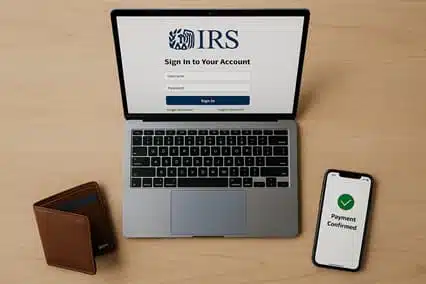
For years, paying the IRS was a deliberate, almost ceremonial chore. Taxpayers would sit down with a checkbook, fill in the four lines, and spend days waiting for the envelope to arrive at that Kansas City service center. The mantra was always “the check is in the mail,” a phrase that implied trust in the postal service and a hope that the cancellation date matched the April deadline. But times change.
In 2026, the landscape of federal payments is defined by the 2026 digital identity mandate, a push by the Treasury to move nearly all individual payments away from paper and toward a secure log in process. An 国税局在线支付 is no longer just a convenience; for many, it is becoming the standard. This guide walks through each 国税局在线支付 path currently available, explaining which tool fits a specific situation and, more importantly, how to verify the money actually left the account.
What is the IRS online payment system? (The 2026 update)
Back in the day, an 国税局在线支付 meant logging on to a clunky website and hoping the connection didn’t drop mid-transaction. That era is effectively over. The definition of the term shifted dramatically in late 2025. Following the signing of executive order 14247, the Treasury Department began enforcing what many now call the digital identity mandate. The goal is straightforward: eliminate the paper check from the equation to cut down on fraud. Paper checks are reportedly sixteen times more likely to be stolen or tampered with than electronic funds.
So, what is an IRS online payment in 2026? It is the primary, and eventually the only, way to settle a tax bill. The system now encompasses everything from a quick debit card swipe to a scheduled bank draft, effectively relegating the mailing of a check to a niche exception rather than the norm. This shift isn’t just about technology; it’s about closing the windows of opportunity for financial fraud that paper provides. Mailing a check now feels less like a payment and more like a gamble.
Why the shift to digital? Speed and security
Because the mail is slow and check fraud is rampant. That is the simple math the Treasury finally accepted. Postal delays have always been a gamble; a check can sit in a processing facility for days before it is ever credited to an account. Every day the check sits in a sorting facility in, say, St. Louis is a day the taxpayer is technically unpaid. With digital payments, the numbers are confirmed instantly.
Why would anyone choose to wait? The security angle matters too. Paper checks carry a person’s full name, address, bank account, and routing number right on the face. When that envelope gets lost, that information is walking around in someone else’s hands. An 国税局在线支付 eliminates that risk entirely, and the payment confirmation arrives within seconds instead of weeks. Most people just want to know the money is gone and the IRS is happy.
How to make an IRS online payment (Step-by-step)
There are actually four distinct paths to complete an IRS online payment, and choosing the wrong one can mean unnecessary fees or a delayed posting date. The first step is always the same: gather the 报税表 or the balance due notice 与 CP14 code in the corner. That number is not optional. It is the key the system needs to match the payment to the correct account.