EV Tax Credit Ended: How to Still Claim Up to $7,500
Federal clean vehicle credits ended for vehicles acquired after September 30, 2025. The cutoff applies to acquisition, which is not always the day you take possession. If you entered a binding written contract and made a payment by the deadline, a later delivery may still qualify. A pre-deadline payment alone, however, does not establish eligibility.
Your contract date, payment date, and placed-in-service date each affect the answer. The buyer, vehicle, and dealer-reporting requirements must also be met. This guide explains how to verify an earlier transaction, identify the correct filing year based on when the vehicle was placed in service, and claim the EV Tax Credit properly. That review matters before you prepare Form 8936 because a qualifying acquisition and a qualifying claim are separate questions.
Quick answer and key takeaways
Quick answer: The EV Tax Credit ended for vehicles acquired after September 30, 2025. You may still qualify with both a binding written contract and payment by that date, even if possession occurred later. Before claiming, confirm buyer and vehicle eligibility, the seller report, delivery year, and any dealer transfer.
Key takeaways
- The cutoff applies to acquisition, not the date you receive the vehicle.
- A contract without a payment by the deadline does not meet the exception.
- A qualifying new vehicle may generate a credit of up to $7,500.
- The qualifying used vehicle credit is limited to $4,000.
- Income, price, vehicle, and ownership rules all still apply to these tax credits.
- The dealer must submit an accepted time-of-sale report.
- Form 8936 remains required after a point-of-sale transfer.
Is the EV Tax Credit still available?
The federal EV Tax Credit is no longer available for vehicles acquired after September 30, 2025, but qualifying vehicles acquired by that date may still produce a credit when they are placed in service.
For individuals, the former federal rules covered two different purchases: the new clean vehicle credit and the previously owned clean vehicle credit. A separate commercial clean vehicle credit applied to qualifying business vehicles, and the IRS gives all three clean vehicle credits the same acquisition cutoff.
The date to check first is when you entered a binding written contract and made a payment, not simply when the vehicle arrived. Delivery determines when the vehicle is placed in service and which tax return should include the claim. The original EV Tax Credit rules for the buyer, vehicle, and seller report still apply. Meeting the cutoff alone does not create a valid credit.
What counts as acquiring an EV before September 30, 2025?
For the September 30 cutoff, the IRS treats a vehicle as acquired when you enter a binding written contract and make a payment. That payment may be a nominal down payment or a trade-in under the Form 8936 instructions.
Keep three dates separate:
- Contract date: When both parties became bound by the written agreement.
- Payment date: When you made the required payment, down payment, or trade-in.
- Possession date: When you took delivery and placed the vehicle in service.
Both the binding contract and payment need dates no later than September 30, 2025, or the EV Tax Credit cutoff is not met. Taking possession is different. If delivery occurred later, the earlier acquisition date may satisfy the cutoff, but you generally wait until the placed-in-service year to claim the credit.
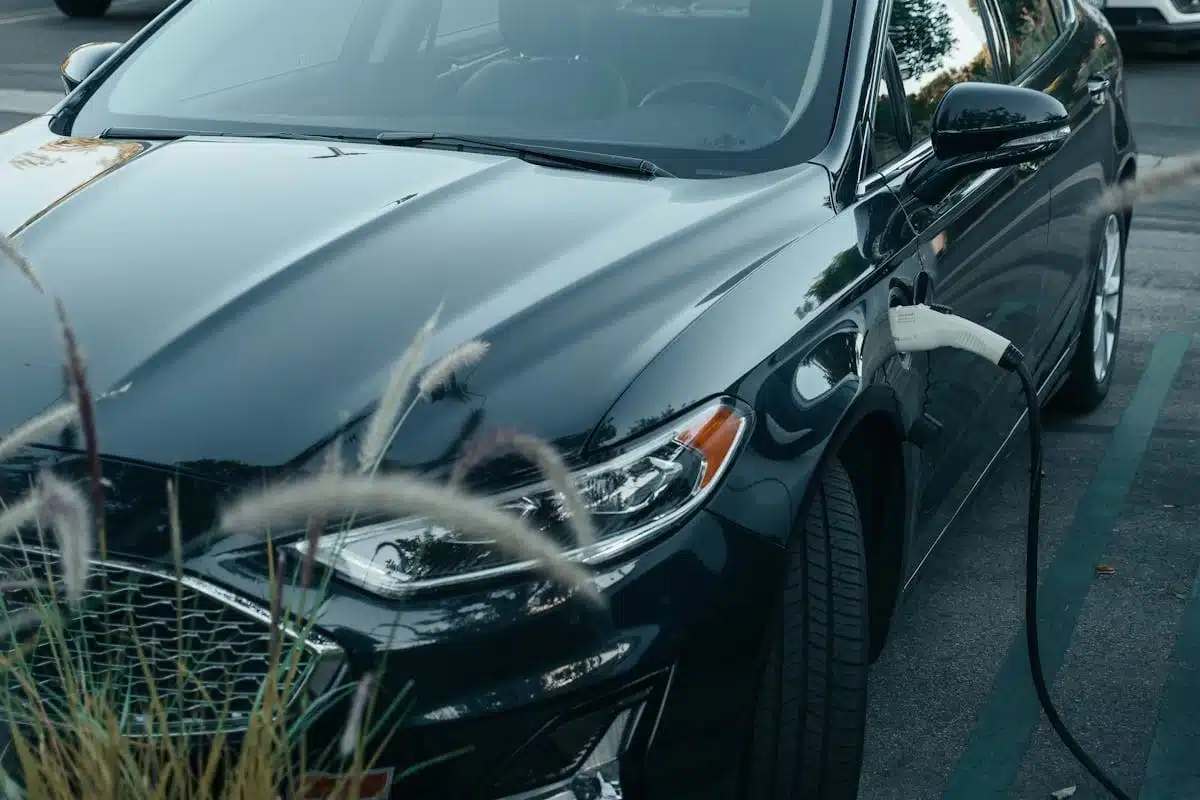
“Bought before September 30” leaves out the facts the return actually depends on. Keep the written agreement and proof that payment occurred by the deadline.
Contract date is not the same as claim year. Even with a timely acquisition, the EV Tax Credit goes on the return for the year the vehicle was placed in service, provided the remaining requirements are met.
Who can still claim up to $7,500?
Meeting the September 30 acquisition cutoff is only the first test. The taxpayer and the vehicle must still satisfy the applicable new clean vehicle rules.
Before treating the $7,500 EV Tax Credit as available, work through the full return-level checklist.
New vehicle eligibility checklist
Check each point:
- Acquisition: You entered a binding written contract and made a payment by September 30, 2025.
- Ownership and use: You own the vehicle, have placed it in service, and primarily use it in the United States. You acquired it for your own use, not resale.
- Income: Start with filing status. Married filing jointly and qualifying surviving spouse returns use a $300,000 modified AGI limit. Head of household is $225,000; all other filers, $150,000.
- Vehicle price: Use MSRP here. Cars stop at $55,000, while vans, SUVs, and pickups can reach $80,000.
- Vehicle and reporting: The model and manufacturer meet the new clean vehicle rules, and the dealer submitted an accepted seller report.
You may generally use modified AGI from the delivery year or the preceding year, whichever is lower. That choice can determine whether an otherwise eligible buyer clears the income limit.
What about the used EV credit?
The used EV Tax Credit has a different calculation. It equals 30% of the sale price, up to $4,000, and the vehicle’s sale price cannot exceed $25,000. Lower MAGI limits and separate buyer and vehicle requirements also apply under the IRS used credit rules.
How do you claim the EV Tax Credit now?
To claim a qualifying EV Tax Credit, verify eligibility and seller reporting, then file Form 8936 and Schedule A for the tax year in which you took delivery.
The delivery year controls the return. That means the EV Tax Credit can belong on a later Form 1040 than the contract date suggests.
Five-step claim sequence
Use the paper trail in this order:
- Match the binding written contract and payment to the September 30 deadline.
- Pin down the day you took possession; that is the placed-in-service date.
- Recheck buyer and vehicle eligibility under the rules for the transaction.
- Make sure the IRS accepted the dealer’s time-of-sale report.
- Prepare Form 8936 and Schedule A with the return for the delivery year.

If the dealer transferred the EV Tax Credit at purchase, step five still applies; the transfer must be reconciled on the tax return.
| Situation | Credit timing | What to do |
|---|---|---|
| Contract and payment by Sept. 30; delivery in 2025 | Potential 2025 credit | Claim on the 2025 return if all rules are met |
| Contract and payment by Sept. 30; delivery in 2026 | Potential 2026 credit | Use the return and form for the 2026 placed-in-service year |
| Contract or payment after Sept. 30 | No federal new/used vehicle credit | Do not claim the expired federal vehicle credit |
| Dealer transferred credit at sale | Reconciliation still required | File Form 8936 for the placed-in-service year |
The IRS may revise Form 8936 for 2026. Use the instructions published for the return you are filing.
What if you already received the credit at the dealership?
Receiving the credit through the dealer does not eliminate the tax-return filing requirement.
The transferred EV Tax Credit reduced the amount due at purchase, but it did not close the tax file. You still report the transfer on Form 8936 and Schedule A, and your final income eligibility is measured on the return.
The transfer did not amount to an IRS guarantee that you met every buyer requirement.
If modified AGI exceeds the applicable limit, you may have to repay the transferred amount as additional tax. A low regular tax liability, by itself, does not trigger repayment when the transferred credit is otherwise valid under the IRS credit transfer rules.
| Issue | Transferred to dealer | Claimed on return |
|---|---|---|
| Benefit timing | At purchase | When return is filed |
| Form 8936 | Required | Required |
| Income eligibility | Still applies | Still applies |
| Regular tax liability | May be lower than transferred credit | Nonrefundable limit applies |
What can block an otherwise valid EV Tax Credit claim?
A pre-cutoff contract alone does not secure the credit if another buyer, vehicle, or reporting requirement fails.
On the return, the EV Tax Credit can fail for any of these reasons:
- No accepted time-of-sale report.
- The VIN on Form 8936 does not match IRS records; if e-file rejects, verify the VIN first.
- Modified AGI is above the limit.
- The vehicle fails model or manufacturer eligibility.
- MSRP or used sale price is above the limit.
- The wrong taxpayer filed the claim.
- The transaction is a lease, not ownership.
- Form 8936 was omitted.
- A dealer transfer was not reconciled.
Missing dealer report
If you did not receive the report, contact the seller and ask whether the submission was accepted by the IRS. A sales contract, invoice, or window sticker does not replace a successfully submitted seller report. Without it, the EV Tax Credit is unavailable.
What the EV Tax Credit ending does not mean
The EV Tax Credit ended for post-cutoff acquisitions, but that date does not settle every earlier purchase or every incentive still available.
| It does not mean | What to understand instead |
|---|---|
| Nobody can claim the EV Tax Credit anymore | Qualifying pre-cutoff acquisitions may still produce a credit |
| Delivery had to occur by Sept. 30 | Acquisition cutoff can be met through binding contract and payment |
| A deposit by itself guarantees the credit | The binding contract and all other eligibility rules still matter |
| Getting $7,500 at the dealer means eligibility is final | Buyer eligibility is reconciled on the tax return |
| Dealer credit means Form 8936 is unnecessary | Form 8936 is still required |
| Every eligible new vehicle receives $7,500 | The amount and eligibility depend on the applicable rules |
| Federal expiration ended every EV incentive | State incentives, local programs, and utility rebates can still exist |
When should you get professional tax help?
Professional review becomes more useful when you cannot verify the acquisition date, seller reporting, income eligibility, credit transfer, or correct tax year yourself.
Consider help when:
- Delivery and acquisition occurred in different years.
- Binding contract status is unclear.
- The seller report is missing or rejected.
- The dealer transferred the credit.
- MAGI is near or above the threshold.
- Form 8936 rejects during e-filing.
- The vehicle has both business and personal use.
- A prior return omitted the credit.
- Multiple clean-vehicle transactions are involved.
Which return should carry the EV Tax Credit may turn on just one of those facts. A transferred amount also needs separate review when income is too high.
Focused tax preparation can review the contract, seller report, Form 8936, and filing year before you submit the return.
EV Tax Credit FAQs
Could a 2026 delivery still qualify for the $7,500 credit?
Contract and payment dates matter because delivery may occur in a different tax year. The EV Tax Credit can go on a 2026 return if a qualifying vehicle was acquired by September 30, 2025, then placed in service in 2026. A new 2026 acquisition is outside the federal credit.
Does an order placed before September 30 count if delivery came later?
Look first for a binding written agreement and a payment dated no later than September 30, 2025. Those facts establish acquisition for the cutoff; taking possession occurs later. An informal reservation or order does not automatically meet the IRS acquisition rule, so review the actual agreement and payment record.
Does a down payment before September 30 preserve the credit?
Not by itself. A down payment or trade-in can satisfy the payment part, even when the amount is nominal. Payment is just one part of the cutoff test. Before filing, match contract date to deadline, confirm buyer and vehicle eligibility, and locate the accepted seller report and placed-in-service date.
Do I need Form 8936 if I received $7,500 at the dealership?
Yes. Receiving $7,500 through the dealer does not replace the return filing. You must report and reconcile the transfer on Form 8936 and Schedule A for the placed-in-service year. If modified AGI exceeds the applicable limit, the transferred amount may have to be repaid as additional tax.
What if the dealer never gave me a time-of-sale report?
Contact the seller and ask whether the time-of-sale report was successfully submitted and accepted by the IRS. A sales contract or invoice is not a substitute. The IRS states that an accepted report is required, so resolve that record before filing Form 8936 for the vehicle.
Is there still a federal tax credit for an EV bought now?
No. For a vehicle acquired now, the federal EV Tax Credit is gone. State, local, and utility programs are separate; each has its own eligibility rules and availability. Check current programs where you live instead of assuming the former federal vehicle credit still applies.
Final takeaway
Before claiming the EV Tax Credit, pull the contract, proof of payment, delivery records, and seller report. Then work through the dates and eligibility rules in order:
- Confirm the contract date.
- Confirm payment occurred by the cutoff.
- Record the possession/placed-in-service date.
- Verify buyer eligibility, including modified AGI.
- Check vehicle eligibility and the price limit.
- Locate the accepted seller report.
- Confirm whether the dealer transferred the credit.
- File Form 8936 for the correct placed-in-service year.
Keep those records together; the acquisition year and filing year may differ, and a dealer transfer still belongs on Form 8936. The paperwork must support each step.
If the contract date, seller report, or return year remains unclear, book a consultation before you file.