IRS 147C Letter Explained: How to Request EIN Verification
If a bank, lender, payroll provider, or vendor asks for official EIN proof, the IRS 147C letter may be the document they want. It verifies the Employer Identification Number the IRS already has on file for your business. It does not create a new EIN, and it does not replace clean business records.
The confusing part is usually the process. You may have lost your original CP 575 notice, changed addresses, changed responsible parties, or found a mismatch between your legal business name and what another company has on record. Before you call the IRS, you need to know what the letter confirms, who can request it, and what details to check so the request does not stall.
Quick answer: An IRS 147C letter is an EIN verification letter from the IRS. It confirms the Employer Identification Number already assigned to a business. If you lost your original CP 575 notice, you can request Letter 147C by calling the IRS Business and Specialty Tax Line at 800-829-4933.
Key takeaways about the IRS 147C letter
An IRS 147C letter helps prove that the IRS already assigned an EIN to your business. Keep these points in mind before you call or send it to a bank, lender, payroll company, or vendor.
- It verifies an existing EIN. It does not create a new one.
- It is often used when the original CP 575 notice is missing.
- The IRS may need to confirm that the caller is authorized.
- Old business addresses or responsible party changes can slow the request.
- Save the letter with your permanent business records once you receive it.
The letter is useful for EIN verification, but matching records still matter before you rely on it.
What is an IRS 147C letter?
An IRS 147C letter is an EIN verification letter from the IRS that confirms the Employer Identification Number already assigned to a business or other entity. It is usually requested when the original CP 575 notice is missing and a bank, lender, payroll provider, vendor, or agency needs proof that the EIN matches IRS records.
The IRS says there are two ways to confirm an EIN:
- Request an entity transcript.
- Call the business and specialty tax line and request Letter 147C, EIN previously assigned.
What the letter confirms
The letter can help confirm:
- The business or entity name tied to the EIN
- The assigned Employer Identification Number
- IRS business record details connected to that number
- Proof that the EIN was already issued, not newly created
What the letter does not do
The IRS 147C letter does not create a new EIN, fix incorrect business records by itself, or replace your original bookkeeping and formation documents.
That is where people get tripped up. An EIN verification letter can prove what the IRS has on file, but it does not automatically correct outdated addresses, responsible party changes, or mismatched business information.
When do you need an IRS 147C letter?
You may need an IRS 147C letter when a bank, lender, payroll provider, vendor, payment processor, or government agency asks for official EIN verification. The letter gives them IRS-backed EIN proof, which can matter when they are trying to match your legal business name to federal tax records.
Common situations include:
- Opening or updating a business bank account
- Applying for a business loan or line of credit
- Setting up payroll under the correct employer account
- Completing vendor onboarding or payment processor review
- Replacing a lost CP 575 notice
- Fixing a name or EIN mismatch in business records
This also comes up during business formation, especially when a new LLC, corporation, or self-employed business needs clean records for banking, payroll, tax filings, or vendor accounts. The letter itself does not prove that every record is correct. It confirms the EIN information the IRS has on file.

Before you send it anywhere, compare the letter to the business name, address, and responsible party information your bank, payroll provider, or vendor is using.
IRS 147C letter vs. CP 575: What is the difference?
The CP 575 is the original EIN confirmation notice, while the IRS 147C letter is a later EIN verification letter used when the original notice is missing or cannot be duplicated. The IRS says a duplicate CP 575 is not issued; instead, the taxpayer may receive Letter 147C.
| Item | CP 575 | IRS 147C letter |
|---|---|---|
| When issued | When the IRS first assigns the EIN | After request, when the EIN was already assigned |
| Main purpose | Original EIN confirmation | Replacement EIN verification |
| Can you request a duplicate? | No. The original notice is not duplicated. | Yes. You request the verification letter. |
| Common use | Startup records and permanent files | Banks, lenders, vendors, payroll, and record cleanup |
In simple terms, CP 575 is the original EIN notice, and Letter 147C is the IRS verification letter you request later when you need proof of an existing EIN.
If you still have the CP 575, keep it with your permanent business records. If you lost it, do not waste time asking for a copy. Ask for the 147C letter instead, then compare the name, EIN, and address before sending it anywhere.
That small comparison matters because third parties may reject documents that do not match their own records. A lender may care about the legal name. A payroll provider may care about the EIN and address. Check both. Do this before you upload or fax the file.
Who can request an IRS 147C letter?
The IRS generally needs to speak with someone authorized to discuss the business tax account before it releases EIN verification information. That means the caller should be able to confirm the business identity and show they have authority to request the IRS 147C letter.
For many small businesses, the right caller is usually the owner, officer, partner, or responsible party tied to the IRS record. The IRS uses responsible party information to identify the person who controls, manages, or directs the entity and its funds. If that person changed, review the IRS guidance on the responsible party before calling.
A tax professional may also help, but the IRS will not discuss every account with any preparer just because they know your business. Proper authorization may be needed. In many IRS matters, that means filing Form 2848, which gives an eligible representative permission to act for you before the IRS.
Before you call, make sure the person requesting the letter matches the business records closely enough to pass IRS verification.
How do you request an IRS 147C letter from the IRS?
You request an IRS 147C letter by calling the IRS Business and Specialty Tax Line and asking for “Letter 147C, EIN Previously Assigned.” The IRS lists that business line as the contact point for EIN questions and business account help, so start there, not with random phone numbers online.
Use this process:
- Call the IRS at 800-829-4933 during business hours, Monday through Friday, 7 a.m. to 7 p.m. taxpayer local time.
- Be ready to verify the legal business name, EIN, business address, entity type, and your authority to speak for the business.
- Ask specifically for Letter 147C, EIN Previously Assigned.
- Request fax or mail delivery if the IRS representative offers both options.
- Save the letter with your permanent business records once you receive it.
IRS 147c letter sample
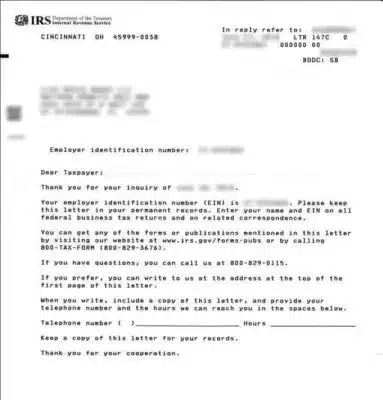
What to say: “I need Letter 147C, EIN Previously Assigned, for my business. I can verify the business name, EIN, address, entity type, and my authority to discuss the account.”
If you are unsure how to get through the phone menu, review this guide on how to call the IRS before dialing. Go slowly. A wrong business name, old address, or unauthorized caller can turn a simple request into another call, especially if a bank or payroll provider is already waiting for EIN proof.
The IRS 147C letter is useful only if the details match the records another party needs to verify for banking, payroll, tax, and vendor files. Do not assume fax delivery is guaranteed or instant. The cleaner move is to prepare your details first, confirm who is allowed to request the letter, and keep a copy once the IRS sends it.
What should you check before calling the IRS?
Before you call for an IRS 147C letter, slow down and check the records first. Your legal business name, EIN, mailing address, business location, and responsible party should line up with what the IRS is likely to have on file. A small mismatch may not seem like much until a bank, payroll provider, or vendor compares the letter against their own records. That is where the request can stall.
Have these details ready:
- Legal business name
- Trade name or DBA, if one is used
- EIN
- Business mailing address
- Business location address
- Entity type
- Responsible party name
- Old CP 575 notice, if available
- Recent IRS letter or business tax transcript, if available
- Fax number, if you want fax delivery and the IRS offers it
If the business moved or the responsible party changed, review Form 8822-B before assuming the IRS record is current. That form is used for certain business mailing address, location, and responsible party changes. Get that part right first.
Do not guess from memory if your records are scattered. Check your formation paperwork, bank records, payroll setup, and recent IRS letters before you call. No shortcuts.
This is also a good time to compare your IRS record against any transcript you already have. The goal is simple: make sure the person calling can answer verification questions and that the letter will match the records another party is asking you to prove.
What to do after you receive the IRS 147C letter
- Save a copy with your permanent business records.
- Compare the legal name, EIN, and address to your bank, payroll, and vendor records.
- Send it only through secure upload, fax, or verified channels.
- Do not email it to an unknown person without confirming the request.
- If the information is wrong, fix the record issue before relying on the letter.
What can delay or complicate a 147C request?
A 147C request can stall if the IRS cannot verify the caller, the business address is outdated, or the responsible party on file no longer matches the current business records. That usually turns a simple EIN verification call into a record-checking problem.
Common issues include:
- Old mailing address
- Wrong business location address
- Legal name or DBA mismatch
- Caller not authorized to discuss the account
- Responsible party changed
- EIN copied incorrectly
- Business reorganized, sold, merged, or renamed
If the business moved or the person controlling the entity changed, review Form 8822-B before calling. The IRS uses that form for certain business address and responsible party updates, and the IRS says responsible party changes should be reported within 60 days.
This is where messy records create extra friction. Your bank may have one name, payroll may have another, and the IRS may still have older information. Before you request the letter, compare your formation paperwork, recent IRS notices, payroll setup, and IRS records. If the issue looks bigger than EIN proof, professional help with IRS records may make sense. That is usually easier before the next call.
When an IRS 147C letter will not fix the problem
- You need a new EIN.
- The IRS has the wrong address or responsible party.
- Your bank has the wrong legal name.
- Your payroll provider entered the EIN incorrectly.
- You need tax debt, notice, or filing help instead of EIN verification.
Can a tax professional help with an IRS 147C letter?
A tax professional can help with an IRS 147C letter when the issue is more than a simple request. If the business name, EIN, address, or responsible party does not match what another party has on file, you may need someone to review the records before the next call.
That help may include checking prior IRS letters, comparing business documents, reviewing whether authorization is needed, and explaining what the IRS may ask before releasing account information. If representation is required, the professional usually needs proper authorization first.
H&S Accounting & Tax Services helps taxpayers and business owners with IRS notice review, transcript review, and IRS correspondence when authorized. The goal is not to promise that the IRS will release the letter faster. The goal is to get the facts organized so the request does not keep bouncing back.
If your records do not match, book a consultation before calling the IRS.
Frequently asked questions about IRS 147C letters
Can I get an IRS 147C letter online?
Usually, no. The normal route is still a phone call to the IRS Business and Specialty Tax Line. Ask for Letter 147C, EIN Previously Assigned. IRS online business tools may help you review related records, but don’t assume they replace the call.
Is an IRS 147C letter the same as an EIN confirmation letter?
People use the terms loosely, so the confusion makes sense. CP 575 is the original notice the IRS sends when it assigns an EIN. An IRS 147C letter is later proof that confirms an EIN already on file.
Can the IRS email a 147C letter?
Do not count on email delivery. The IRS representative may offer fax or mail, depending on the situation. If a bank, vendor, or unknown person asks you to send EIN documents through a random email thread, slow down and verify who is requesting it.
How long does it take to receive a 147C letter?
Timing depends on IRS handling, delivery method, and whether the caller passes verification. Fax can be faster when available, but it is not guaranteed. Mail takes longer, and mismatched records can turn a simple request into another call.
What if the IRS has the wrong business address?
If the IRS has an old address, check whether Form 8822-B needs to be filed. The real issue is not only getting the letter. Your IRS record should match what banks, payroll providers, and vendors need to verify.
Can my accountant request a 147C letter for me?
A tax professional may be able to help, but the IRS usually needs proper authorization before discussing business tax account information. That may mean Form 2848 if representation is required. Don’t assume a preparer can call without permission on file.
Final takeaway
An IRS 147C letter does one job: it verifies the EIN the IRS already assigned to your business. You’ll usually need it when a bank, lender, payroll provider, vendor, or agency asks for proof. But the letter is only helpful if the details line up with your business name, address, responsible party, and EIN records.
Before you call, gather the basics and compare them against your formation paperwork, IRS letters, payroll setup, and bank records. Do not treat the letter as a fix for messy information. It confirms what the IRS has on file.
If the request points to a larger record problem, H&S Accounting & Tax Services can help review the issue and explain what may need to be corrected before you contact the IRS again. That is where a careful review can save another frustrating call.