IRS Certified Letter: What It Means and What to Do Next
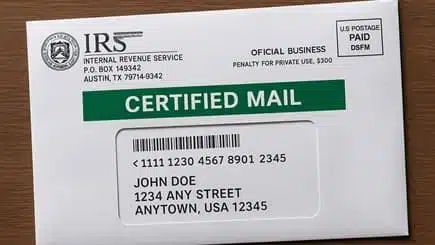
An IRS certified letter can feel alarming, but the envelope does not tell you what the IRS wants. The issue may involve a proposed tax change, a collection action, a lien filing, or another formal matter. What matters first is the information inside.
Open the certified letter promptly and look for the IRS notice number, usually shown as a CP or LTR code. That code identifies the notice and helps you determine which instructions and deadline apply. Also check the tax year, amount, notice date, and response date.
Do not assume the letter means an audit or immediate levy. A CP3219A Notice of Deficiency, for example, is not simply a bill. It proposes additional tax and may start a limited period for filing a Tax Court petition. The letter’s code and deadline determine your specific next step.
Quick answer and key takeaways
Quick Answer: An IRS certified letter is trackable mail used for certain important or legally significant notices. It does not automatically mean an audit or levy. Start with the CP or LTR number. Then check notice date, tax year, amount, and response deadline. Confirm it through IRS.gov or your IRS Online Account before paying, calling, or sending records.
Key takeaways
- IRS certified mail tracks delivery, not the issue.
- The CP or LTR number identifies it.
- Deadlines vary and can affect appeals.
- Refusing delivery may not stop processing.
- Verify it before paying or sending records.
- A tax transcript may confirm account activity.
Seek professional review for a levy, lien, Tax Court deadline, or unpaid payroll taxes.
What does an IRS certified letter mean?
An IRS certified letter means the agency used a trackable mailing method. The envelope does not show whether the issue is proposed tax, collection, appeal rights, or something less serious. You need the CP or LTR number to know that.
The Postal Service explains that Certified Mail provides a mailing receipt, tracking history, and verification of delivery or attempted delivery. A return receipt or restricted delivery is separate, so a certified letter from IRS does not always prove that you signed for or read it.
Your response depends on the notice inside. Find the CP or LTR number, tax year, notice date, amount, and deadline. The code identifies the notice and instructions. A proposed tax adjustment calls for comparing the notice with the filed return. A collection notice requires checking the balance, tax periods, and appeal language. Treat IRS certified mail as a signal to identify the notice, not as proof of one outcome.
What an IRS certified letter does not mean
Does an IRS certified letter mean an audit? Not by itself. It also does not confirm an immediate levy or a correct balance. The notice inside controls the answer. Check the code, tax period, amount, and IRS letter deadline before acting. Read carefully.
| Assumption | What is actually known |
|---|---|
| It means an audit | A Notice of Deficiency proposes tax changes. It does not itself confirm an audit. |
| A levy is happening now | Some letters warn of collection action or provide appeal rights before a levy. |
| The amount is correct | Compare the notice with the filed return, payment records, and account transcript. |
| Refusing delivery stops the case | Certain deadlines may depend on valid mailing, not whether you opened the envelope. |
| It must appear online | The IRS says only selected notices appear in your Online Account. |
| Certified mail means you signed | Certified Mail records mailing, delivery, or attempted delivery. Signature services are separate. |
Why does the IRS send certified mail?
IRS certified mail is not used for every notice. The agency generally reserves it for letters where the mailing date, delivery attempt, or appeal rights may matter. That record can become important if a deadline to challenge proposed tax or request a hearing passes.
To document mailing or attempted delivery
The Postal Service explains that Certified Mail provides a mailing receipt, tracking, and verification of delivery or attempted delivery. That record can matter even if you did not personally sign for the envelope.
To formally notify you of IRS action
A certified IRS notice may propose tax, warn of levy action, report a tax lien, or propose a Trust Fund Recovery Penalty. Each notice affects different rights. Check the code, tax period, amount, and response instructions before deciding what the letter means.
To establish a time-sensitive procedural step
Some deadlines run from the notice or mailing date, not from the day you open the envelope. IRS certified mail helps document that procedural step. For example, a Notice of Deficiency may start a Tax Court petition period, while a final levy notice may provide Collection Due Process rights. The mailing method matters, but the notice inside controls your specific response.
Common IRS certified letters and response deadlines
Start with the notice code. Common IRS certified letters may concern proposed tax, collection, liens, or payroll taxes, but the envelope cannot identify which issue applies. The IRS certified letter deadline shown inside deserves attention.
| Notice | What it generally means | Deadline to check | Review first |
|---|---|---|---|
| CP3219A | A Notice of Deficiency proposing changes after an unresolved adjustment. | Usually 90 days to petition Tax Court, or 150 days when addressed outside the United States. | Proposed changes and petition date. |
| CP3219N | A Notice of Deficiency issued when the IRS did not receive a return and calculated proposed tax. | Usually 90 days, or 150 days when addressed outside the United States. | Filing history and IRS calculation. |
| LT11 or Letter 1058 | A final notice of intent to levy with Collection Due Process rights. | The 30-day period stated in the notice. | Form 12153 deadline and listed tax periods. |
| CP90 | Notice of intent to levy certain assets with hearing rights. | Use the Collection Due Process deadline shown in the notice. | Balance, tax periods, and appeal instructions. |
| Letter 3172 | Notice that the IRS filed a Notice of Federal Tax Lien. | The "must file by" date shown in the letter. | Enclosed Form 668(Y)(c) and affected periods. |
| Letter 1153 | Proposed personal assessment of the Trust Fund Recovery Penalty. | 60 days, or 75 days when addressed outside the United States. | Responsible-person finding and proposed amount. |
Where CP504 fits
A CP504 notice is serious because it warns of further collection and levy action. It is not interchangeable with LT11 or Letter 1058, which generally provides the formal Collection Due Process hearing opportunity. Check the wording and IRS certified letter deadline rather than relying on “final notice” alone.
What about audit and identity-verification letters?
The IRS may conduct audits or request identity verification by mail, but not every letter arrives certified. Use the notice number to confirm its purpose before assuming either issue applies.
What should you do after receiving an IRS certified letter?
The letter itself controls what happens next. Find the notice code and deadline first, then verify the tax year, amount, and IRS claim against your return, payments, and account records before you respond.
- Keep the full mailing. Save the envelope, notice, and every enclosure. The postmark and notice date may matter if the letter includes appeal or Tax Court rights.
- Find the identification details. Locate the IRS notice number, usually a CP or LTR code. Write down the tax year, amount, notice date, response deadline, and IRS contact unit.
- Identify what the IRS says happened. Determine whether it is proposing tax, requesting documents, demanding payment, reporting a lien, or warning of levy action. Those are different problems with different response rules.
- Compare the notice with your records. Review the filed return, amended return, W-2s, 1099s, payment confirmations, prior correspondence, and your tax transcript. When available, compare the balance and payments with your IRS Online Account.
- Decide whether you agree. The IRS may be correct, partly correct, already paid, or using the wrong taxpayer details. Do not pay until you know which one applies.
- Use the response method in the notice. Follow its mailing address, fax number, upload instructions, or required form. Keep copies and proof of submission. Prepare before you call the IRS.
If several years, disputed income, a levy warning, lien filing, or payroll taxes are involved, consider IRS notice help before you respond to the IRS letter. H&S Accounting & Tax Services offers notice and transcript review for the affected periods when included in the engagement scope.
What if you missed, refused, or never received the letter?
Missing or refusing an IRS certified letter may not stop the notice or extend its deadline. Valid mailing to your last known address may matter even if you never opened the envelope.
- You received a USPS delivery slip. Pick up the letter promptly. A response period may already be running from the notice or mailing date, so waiting for redelivery can cost time.
- The letter was returned unclaimed. Refused IRS certified mail may still satisfy mailing requirements for some notices. A Notice of Deficiency, for example, can start a Tax Court petition period even if you never read it.
- It went to an old address. An IRS letter old address problem often starts with the address on your most recently processed return. Postal forwarding does not automatically update IRS records.
- The deadline may have passed. Start with the notice code and date. Depending on the letter, a late appeal, equivalent hearing, audit reconsideration, payment proof, or another available procedure may still apply. The specific notice type decides what comes next.
How can you verify that an IRS letter is real?
- Check the CP or LTR number. Look it up on the official IRS notice page. Different codes carry different instructions, deadlines, and appeal rights.
- Match the tax details. Compare the tax year, notice date, masked taxpayer information, amount, and payment history with your return and records.
- Review your IRS Online Account. First, check whether the balance, payments, or available notices match the letter.
- Read the payment instructions carefully. Legitimate federal tax payments should be payable to the United States Treasury.
- Watch for scam demands. A fake IRS certified letter may request gift cards, cryptocurrency, wire transfers, or immediate payment to avoid arrest. Those are IRS letter scam warnings.
- Verify the contact method. Use a phone number obtained independently from IRS.gov, not a suspicious number or link in the letter.
- Get organized before you call. Keep the notice code, tax year, amount, payment proof, and your questions in front of you when you call the IRS.
Online-account limitation: You can verify IRS notice online only when that notice type is available in your account. Absence from the account does not settle authenticity.
Can you handle the letter yourself, or should you get help?
You can handle an IRS certified letter yourself when the issue is clear, the amount matches your records, and no appeal right is at risk. Get help when facts are disputed or a deadline could limit options.
| You may handle it yourself when | Consider professional review when |
|---|---|
| The notice is clear. | You cannot tell what the IRS changed. |
| The amount matches your return and payments. | The balance conflicts with your records. |
| One document can resolve the issue. | Several tax years or entities are involved. |
| No appeal deadline appears. | The letter includes a Tax Court or Collection Due Process deadline. |
| You can follow the instructions. | It mentions a levy, lien, audit, payroll tax, or Trust Fund Recovery Penalty. |
Letter 1153 deserves attention. It proposes personal assessment of unpaid trust fund taxes and raises questions about responsibility and willfulness.
A CPA can review an IRS certified letter when the records, deadline, or tax issue are unclear. H&S Accounting & Tax Services offers IRS notice help within the engagement scope.
Frequently asked questions about IRS certified letters
Is certified mail from the IRS always bad news?
No. An IRS certified letter means the agency used trackable mail for a notice. IRS certified mail may involve proposed tax, collection, a lien filing, or appeal rights. The CP or LTR number identifies the issue.
Does an IRS certified letter mean I am being audited?
Not necessarily. An audit letter should identify the examination and requested records. Certified mail may contain a Notice of Deficiency, levy notice, lien notice, or payroll tax penalty proposal. Check the notice code before assuming an audit started.
Can I see my IRS letter online?
Sometimes. Your IRS Online Account may show selected notices, balances, payments, and activity. It does not display all IRS certified mail. If the notice is missing online, compare the CP or LTR number with IRS.gov and review your tax transcript for related entries before deciding it is fake.
What if the notice shows a balance I already paid?
Do not pay twice. Compare the notice with your payment confirmation, bank record, and tax transcript. Check the tax year and payment date because a payment may have posted to the wrong period or may not yet appear on the notice.
Can I respond to the letter online?
Only when the notice provides an approved online response option, such as a Document Upload Tool access code. Use the method printed in the letter. Do not email tax records or upload documents through an unrelated link.
Should I call the IRS before sending documents?
Call when the issue or response instructions are unclear. Organize the notice number, tax year, deadline, return, payment proof, and questions. That preparation helps the representative locate the issue faster. Review this before you call the IRS.
Final next steps after an IRS certified letter
Open the letter and find the CP or LTR code. Write down the deadline, tax year, amount, and tax period. Then verify the notice, compare it with your return, payment records, transcript, and documents, and follow the response method listed in the letter.
Do not send a rushed payment or dispute. A Notice of Deficiency, levy notice, lien filing, and payroll tax letter each call for a different response.
If the amount is disputed, the records do not reconcile, or the letter includes a Tax Court, appeal, levy, lien, audit, or payroll tax issue, consider IRS notice help. H&S Accounting & Tax Services can review the notice before you respond to the IRS letter, when included in the engagement scope.