Estimated Tax Payments: How to Avoid IRS Penalties
Estimated tax payments can surprise you because the IRS isn’t only looking at what you owe in April. It also looks at when you paid. Federal income tax runs on a pay-as-you-go system, which means tax is usually supposed to be paid during the year as the income comes in.
That’s where people get caught. You pick up 1099 work in June, your rental property finally turns a profit, or your side business has one strong quarter. No paycheck withholding is covering that extra income, so the tax bill quietly builds in the background.
The painful part isn’t just the balance due. It’s finding out that paying too little during the year may also trigger an IRS underpayment penalty. That surprise hits hard.
CPA note: Estimated tax issues usually come down to two things: amount and timing. At H&S Accounting & Tax Services, we review prior-year tax, current-year income, withholding, and payment history before recommending a payment target. Guessing from your bank balance is where many taxpayers get into trouble.
What are estimated tax payments?
Estimated tax payments are payments you make to the IRS before tax season because not enough tax is coming out of your income automatically. That usually happens when you earn money outside a regular paycheck, like 1099 work, rental income, investment gains, or business profit. The IRS uses estimated taxes for income that doesn’t have withholding taken out upfront.
That can include money from freelance work, self-employment, rental income, interest, dividends, capital gains, or a business profit that lands unevenly during the year. It can also cover self-employment tax, which is the Social Security and Medicare tax many independent workers pay for themselves.
Think of estimated payments as a way to keep your tax bill from piling up quietly in the background. You’re not paying a special extra tax. You’re prepaying part of the tax you’ll report later on your tax return, so April doesn’t turn into one big financial slap.
Who needs to make estimated tax payments?
You may need estimated tax payments if your income is coming in without enough federal tax already taken out. That’s the real test. The IRS generally pays attention once you expect to owe at least $1,000 after withholding and refundable credits, so even a side job that feels “small” can create a tax bill if you don’t plan for it.
This often shows up with freelance work, 1099 income, self-employment, rental profit, investment gains, interest, dividends, or business income. It can also hit W-2 employees who switch jobs, reduce withholding too much, get a large bonus, or start a weekend business that quietly grows. If you’re self-employed, our self-employed tax guide explains the bigger picture, including deductions and self-employment tax.
A quick way to think about it: if no one is pulling tax out before the money reaches you, you may have to handle that part yourself.
Common taxpayers who may need estimated payments include:
- Freelancers and independent contractors
- Small business owners
- Landlords with taxable rental income
- Investors with capital gains
- Retirees with pension, IRA, interest, or dividend income
- W-2 workers with side income or weak withholding
The smart move is to check early, not after tax season starts. If your income changed this year, your old withholding setup may not match your new tax reality.
Who may not need to make estimated tax payments?
You may not need to make estimated tax payments if enough tax is already being withheld from your wages, pension, or other income. Some taxpayers also avoid estimated payments when they had no tax liability for the prior year, were a U.S. citizen or resident for the full year, and their prior tax year covered a full 12 months.
That does not mean you should guess. If your income changed, your withholding may no longer match your tax situation.
Why the IRS charges penalties even when you pay later
The IRS charges penalties even when you pay later because federal income tax runs on a pay-as-you-go system. In plain English, the IRS expects most of your tax to be paid as you earn the money, either through withholding or estimated tax payments. The underpayment penalty can apply when you don’t pay enough during the year or you pay after the required payment period.
That’s the part that feels unfair to many people. You may file your return on time, pay the full balance in April, and still see a penalty because the IRS is looking at the timing, not only the final total. A contractor who earns most of their income in summer, skips the September payment, then catches up months later may still have a timing problem.
The same issue can happen even if you’re due a refund later. The IRS says late estimated tax payments may trigger a penalty, even when your return eventually shows a refund. That’s why this isn’t just a “pay by tax day” issue. It’s a throughout-the-year issue, and the earlier you catch the gap, the easier it is to reduce the damage before the next deadline, before it turns into a notice or a bigger bill.
Estimated tax payment deadlines for 2026
The 2026 federal estimated tax payment deadlines are April 15, June 15, September 15, and January 15, 2027. Those dates matter because the IRS isn’t only checking whether you paid eventually. It also looks at whether you paid during the right part of the year.
That’s the part that trips people up. You may make a big payment in January and still have a penalty issue from an earlier missed period. The Taxpayer Advocate Service lists the 2026 estimated tax dates this way:
| Payment period | Due date |
|---|---|
| January 1 to March 31, 2026 | April 15, 2026 |
| April 1 to May 31, 2026 | June 15, 2026 |
| June 1 to August 31, 2026 | September 15, 2026 |
| September 1 to December 31, 2026 | January 15, 2027 |
One odd thing: these payment periods don’t line up like clean calendar quarters. The second period covers only April and May. The last one covers four months. Not exactly intuitive, but that’s the system.
The smart move is simple. Put the dates on your calendar, save each payment confirmation, and check your income before every deadline. If a deadline falls on a weekend or legal holiday in another year, it usually moves to the next business day.
How much should you pay to avoid an estimated tax penalty?
Most taxpayers can lower their estimated tax penalty risk by paying enough during the year to fit one of the IRS safe harbor rules. Think of safe harbor as a payment target, not a magic shield. It can help show the IRS that you paid enough on time, even if your final return still says you owe more. That’s the part people miss. The IRS underpayment penalty rules look at both timing and amount, so a profitable quarter, a stock sale, or one strong 1099 project can throw off the math fast.
For individuals, the common safe harbor targets are:
- Owe less than $1,000 after subtracting withholding and refundable credits.
- Pay at least 90% of your current-year tax.
- Pay 100% of last year’s tax, if last year covered a full 12 months.
- Pay 110% of last year’s tax if your prior-year adjusted gross income was more than $150,000, or $75,000 if married filing separately.
Here’s the practical problem. If you’re self-employed, had a strong sales year, sold stock, or picked up rental profit, your current-year tax may jump fast. Using last year’s tax can be easier than guessing this year’s income month by month, but it can still leave you owing money at filing time. That’s not failure. It means the payment target protected one issue while the final return calculated the real tax.
The smart move is to compare both numbers before choosing. Look at last year’s total tax, estimate this year’s income, then subtract expected withholding and credits. If your income is uneven, don’t blindly divide everything into four equal payments. A quiet first quarter and a huge fourth quarter can distort the math, and Form 2210 may matter later. Estimated tax payments work best when they’re tied to actual income, not hope. Guessing feels faster. It often costs more than one careful review early on.
How to calculate your estimated tax payments without guessing
You calculate estimated tax payments by starting with last year’s return, then adjusting for what changed this year. Don’t guess from your bank balance. A busy month can make your income look better than it really is, especially if inventory, payroll, rent, or contractor costs haven’t cleared yet. The IRS estimated tax rules are built around expected income, deductions, credits, and withholding.
Use a simple process:
- Start with last year’s total tax. This gives you a baseline, especially if your income is fairly steady.
- Estimate this year’s income. Include wages, business profit, 1099 income, rental income, interest, dividends, and capital gains.
- Subtract expected deductions and credits. Don’t inflate them just to feel better. Use numbers you can support.
- Add self-employment tax if it applies. This is where freelancers and business owners often underestimate the bill.
- Subtract federal withholding. Include tax withheld from paychecks, pensions, or other income.
- Divide the remaining amount by the payment deadlines. If your income is uneven, review the numbers before each deadline instead of assuming four equal payments work.
For small business owners, this calculation is only as reliable as the records behind it. If your books are messy, your estimate may be off before you even start. That’s why clean books matter. They help you see real profit, not just cash sitting in the account. If your transactions are behind, organized clean books can make estimated payments less of a guessing game and more of a planned tax move.
Can you increase withholding instead of making estimated tax payments?
Yes, you can increase withholding instead of making estimated tax payments if you have wages, a pension, or certain retirement distributions with federal tax withheld. This can be easier than sending quarterly payments yourself because the money comes out before it reaches your bank account. Less room to forget. The IRS Tax Withholding Estimator can help you check whether your current withholding is too low, too high, or close enough.
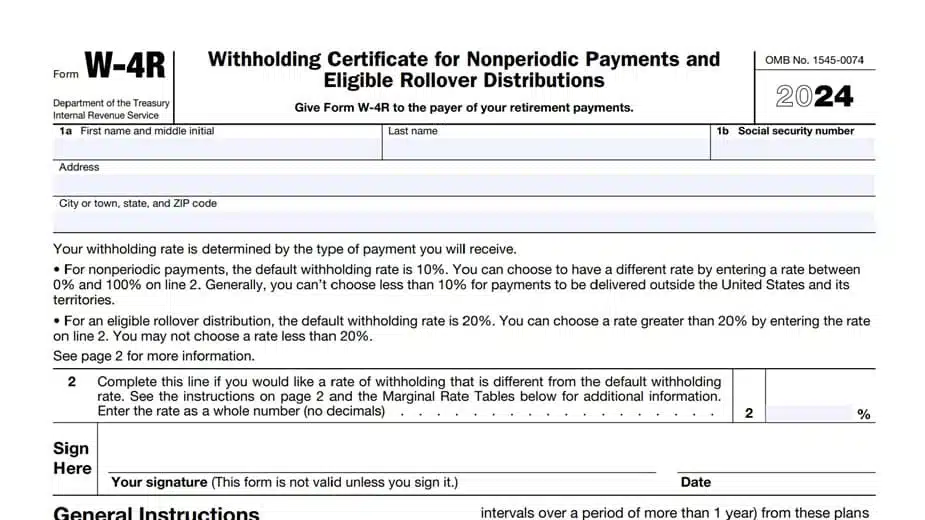
This option often works well for W-2 employees who picked up side income, changed jobs, received a bonus, or had investment income that pushed the tax bill higher than expected. You may be able to submit a new Form W-4 to your employer and have extra federal tax withheld from each paycheck. Retirees can sometimes adjust withholding from pensions, annuities, or IRA distributions too, depending on the payer and account type.
Still, withholding isn’t automatic tax planning. If your side business grows fast, your rental profit changes, or you sell stock near year-end, one quick adjustment may not cover the full gap. The smart move is to check the numbers before the next deadline, not after the IRS adds a penalty notice to the story.
What should you do if you missed an estimated tax payment?
If you missed an estimated tax payment, pay it as soon as you can, then recalculate the rest of the year before the next deadline hits. Waiting until April usually doesn’t fix the timing problem. The IRS may still treat the skipped quarter as late, even if you eventually pay the full balance.
Do this next:
- Confirm the tax year and payment period before sending money.
- Pay through an official IRS payment method, not a random link or phone number.
- Save the confirmation number and bank record.
- Recheck your income, deductions, credits, and withholding.
- Adjust the next payment if your income changed.
- Review Form 2210 if your income came in unevenly or you want to see how the IRS may calculate the penalty.
Here’s where people make it worse. They miss one payment, panic, and then ignore the next deadline because the math feels messy. Don’t do that. A late payment is one problem. Several missed periods can stack the issue.
If your income was uneven, like a contractor who earned almost nothing in January but landed a large project in August, the annualized income method may help match the tax to when the money actually arrived. It’s not for every taxpayer, and it takes more work. But it can matter.
The smart move is to fix the missed payment, update your numbers, and keep proof. If the IRS sends a notice later, you’ll have a cleaner paper trail and a better starting point. That record matters when you’re trying to show what was paid, when, and for which quarter.
How to pay estimated taxes safely online
Pay estimated taxes online through an official IRS payment method, and double-check the tax year before you submit anything. That sounds basic, but one wrong drop-down can send a payment to the wrong period. For many individual taxpayers, IRS Direct Pay is the simplest option because it lets you pay from a bank account without creating a full account. Our IRS Direct Pay guide walks through that process in plain English.
Before you hit submit, check these details:
- Payment type: estimated tax
- Tax year: the year the payment belongs to
- Bank account and routing numbers
- Payment date
- Confirmation number
If you own a business or make repeated tax payments, EFTPS may be worth setting up. It takes more effort upfront, but it gives you more account control. The main thing is this: don’t pay through random links, search-result phone numbers, or messages claiming to be from the IRS. Use official payment channels, save proof, and review your options in our online payment guide before sending money.
Florida taxpayers: what changes and what does not
Florida residents generally don’t make Florida individual income tax estimated payments because Florida does not have a state personal income tax. But that does not remove the federal rules. If you have self-employment income, rental profit, investment gains, or side income with little withholding, the IRS can still expect estimated tax payments during the year.
For Florida business owners, the state picture depends on the entity and tax type. A sole proprietor usually worries about federal estimated tax, not Florida individual income tax. A corporation, or an entity taxed federally as a corporation, may have Florida corporate income/franchise tax duties, which the Florida Department of Revenue explains separately.
The tricky part is multi-state income. If you work remotely, own property outside Florida, sell into other states, or moved during the year, another state may still want a return or estimated payments. Florida helps, but it doesn’t make every tax issue disappear. That is where a quick review can prevent surprises.
When should you get professional help with estimated tax payments?
You should get professional help with estimated tax payments when your income changes enough that guessing could cost more than asking. That usually means you have self-employment income, rental profit, investment gains, multiple jobs, a new business, or a prior underpayment penalty. The issue isn’t just math. It’s timing.
Some situations are harder to handle alone:
- Your books are behind or your QuickBooks file doesn’t match your bank statements.
- You sold stock, crypto, a rental property, or business assets.
- Your income jumps in one quarter, then slows down.
- You owe tax every year even though you thought withholding was enough.
- You received an IRS notice about a penalty or balance due.
H&S Accounting & Tax Services can help review your income, withholding, deductions, credits, and payment history when that work is properly scoped. If the problem starts with messy records, clean books may need to come first. If you need filing support, our income tax preparation service can help you organize the return and related tax documents.
Before you ask for help, gather last year’s tax return, recent pay stubs, 1099s, business profit numbers, rental income details, investment sale reports, and proof of payments already made. Better records lead to a better estimate. Simple as that.
Need help reviewing your estimated tax payments?
If your income changed, your books are behind, or you already missed a payment, H&S Accounting & Tax Services can help review your numbers before the next deadline.
FAQ about estimated tax payments
If you should have paid and did not, the IRS may charge an underpayment penalty. The balance itself is one issue. The timing is another. You can file on time, pay in April, and still get penalized because the IRS expected payments earlier.
You can make a late payment, but one payment at year-end may not fully fix earlier missed periods. The IRS usually expects tax to be paid as income comes in. A December payment may reduce what you owe, but it might not erase the penalty from April, June, or September.
Maybe. A regular paycheck helps because federal tax is withheld. But if you also have 1099 income, rental profit, investment gains, or a growing side business, your paycheck withholding may not cover everything. That is where people get caught. The W-2 makes things feel handled.
The 110% safe harbor rule applies to higher-income taxpayers who use last year’s tax as the payment target. If your prior-year adjusted gross income was over $150,000, or $75,000 if married filing separately, you may need to pay 110% of last year’s tax to reduce penalty risk.
Individuals usually use Form 1040-ES to figure and pay estimated tax. If you missed payments, paid unevenly, or want to see whether a penalty applies, Form 2210 may enter the picture. Don’t let the form names scare you. One estimates the payments. The other checks the penalty.
Conclusion: Do not wait for the IRS to tell you
Estimated tax payments are easier to fix before a deadline than after an IRS notice shows up. If your income changed this year, don’t assume last year’s setup still works. A new 1099 client, one profitable rental month, a stock sale, or a growing side business can shift the numbers fast.
The smart move is simple: check your income, withholding, safe harbor target, and payment history before the next due date. Save confirmations. Review your books. Adjust early if the math has changed.
You don’t need to panic, but you do need to pay attention. The IRS system rewards timing. Waiting until tax season may leave you with a balance due, a penalty, or both. That’s the part many taxpayers learn too late. Handle it now, while you still have room to correct the course.